Editorial Council · Reader's Report5 July 2026
Strike Zone
The Complete Series · a novel by Grettir Jacobs, 2013 · read end-to-end by the full clerk pipeline — every stage, every chapter, one run.
Why this novel is here
Every other book on this site is a public-domain classic — which invites a fair objection: maybe the model is just remembering a century of published criticism. No model showed any memory of Strike Zone. It's a 2013 Kindle novel with a near-zero web footprint, published under the pen name this project itself publishes under, and analyzed here with the rights-holder's authorization. Before the run, the models were probed for any knowledge of the book: blank, across two frontier-model families. Everything below is a first reading — the pipeline meeting an unseen novel, which is exactly the situation it exists for.
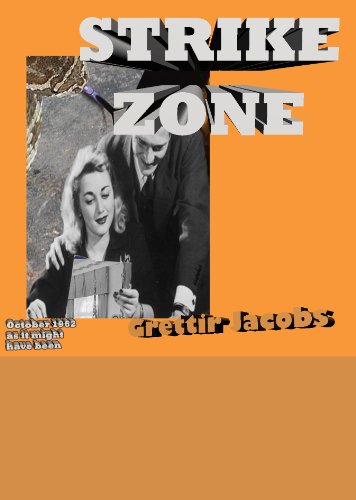
It is after midnight on October 19th, 1962, and the Cuban Missile Crisis has reached its most dangerous point. The world sits in the STRIKE ZONE of thermonuclear annihilation… Margaret Potter, a beautiful young staffer, inadvertently loses a transcript of a high level meeting which contains details so explosive that they could start World War III if they fall into the wrong hands.
From the Council Literary Analyst
A fair caution before the praise: language models flatter. Weigh the letter against the rest of this page — the same run logged the 12 concerns below, flagged 16 of its own quotes as paraphrase, and the same pipeline criticizes the classics just as readily. The praise is graded by the same evidence gate as everything else here.
What impresses me most is the architecture beneath the surface: 85 foreshadowing/payoff pairs woven through 16 plot threads is the mark of a writer who plants with intention and trusts the reader to remember — that density of seeded material across 83,000 words suggests genuine long-form discipline rather than improvisation.
Your point-of-view work is equally deliberate: intimate psychic distance sustained in third-limited, paired with said-dominant attribution and only moderate filtering, means you're staying inside your viewpoint character without cluttering the lens — and the payoff shows in moments like Margaret's ironic interior counterpoint in chapter 9, where interiority does the work of keeping an exposition-heavy scene alive. Chapter 14 demonstrates real pacing craft: you hold a scene at near real-time through circular, passive-aggressive dialogue, letting social tension accumulate before detonating it with the note and the radio transmission — that's a writer using stasis as a loaded spring, not an accident.
Your overall commitment to expanded, immersive scene-time (19 of 22 chapters) is a coherent aesthetic choice that matches the intimate psychic distance; you've built a novel that lives inside its moments rather than summarizing past them. With 78 identified craft choices against only 12 concerns, the data confirms what these individual moments suggest: this is controlled, intentional work.
Plot Structure — the Council's reading
Strike Zone is a Cold War espionage thriller told entirely through the single POV of Margaret Potter, a White House secretary whose lost top-secret transcript (the TRIGGER plan) makes her simultaneously suspect, target, bait, and — via her flawless word-memory — the document's living backup. Structurally it follows a Three-Act thriller shape (moderate confidence): a tight setup (ch. 1–4), a long pursuit-and-riddle confrontation (ch. 5–18), and an extended, deliberately deflated resolution (ch. 19–22). The archetypal core is The Riddle braided with Pursuit and Love: the mystery of who took the transcript drives the plot, while the Margaret–Korec attraction supplies the emotional spine.
Its divergences from convention are consistent and thematic rather than accidental: the geopolitical climax resolves offstage behind the Oval Office door (the banality of annihilation), the heroine is denied conventional heroic agency and conventional romantic closure alike, and the book ends not with restoration but with Margaret poised in a literal strike zone — danger that, unlike the human world she fled, at least gives honest warning. The emotional arc is man-in-hole with a muted recovery and a deliberately ambiguous final oscillation.
- Chekhov's gun
- MacGuffin
- Reversal / plot twist
- Foreshadowing
- Flash-forward suspense frame
- Everyone-a-suspect misdirection
- Offstage climax
- Title symbolism
- Gapped memory as plot mechanism
The analysis detected an unreliable narrator and adjusted its own advice accordingly: an orphaned seed may be a suppressed memory; an arc reversal may be the narrator revising her account.
Style Profile
| point of view | third-limited, past tense — one narrative voice across all 22 chapters |
| psychic distance | intimate — exterior/interior doubling that is thematized, not accidental |
| dialogue attribution | said-dominant |
| show / tell balance | balanced |
| voice consistency | 10 chapters consistent · 11 minor drift · 0 significant drift (21 of 22 assessed) |
| settled decisions | 57 settled · 78 deliberate craft choices (do not flag) · 12 concerns |
Craft Concerns — the notable three of twelve
The long expository paragraph on Margaret's word-memory circles and repeats itself ("That was her talent, her gift"; "her special, secret talent") in a way that reads more like unrevised drafting than controlled obsessive voice — and it front-loads plot-critical information with a heavy hand. Compression would preserve both the voice and the plant.
The biggest craft risk in its chapter: the info-dump ("micro-groves along their sides… weaponized agent") breaks his established clipped speech pattern and stalls the scene. The heroine's "Huh?" acknowledges but doesn't fully redeem it.
Seven habitual filters ("she noticed," "she felt," "she could feel") in a POV already firmly established — most could drop without loss and would tighten psychic distance. Same family: four "began to / started to" softenings and two "suddenly" intensifiers that nothing thematic protects.
Voice Fingerprint
- Rhythm
- Long sentences with embedded qualifications and parentheticals ("one foot half out of its vellum shoe, but prettily so (she might have planned it)"), punctuated by short declaratives for emphasis ("Just once. She hardly dared breathe."). Distinctive and mostly sustained.
- Imagery
- Bodily and visceral, often finding the grotesque inside the erotic: "eyes swam in yellow mucous," the salmon "torn, ravaged by the fight to return to the beginning." Decay made holy by power is a strong, coherent image system.
- Dialogue
- Clipped and performative — power-talk fragments. Addison's rage-dialogue ("Sometimes one has to learn to endure the little twinges") is chillingly in-period and in-character. Dialogue works as a hard surface against the fluid interiority.
- Diction
- Mid-century, plainspoken, with occasional formal lifts ("extemporaneously," "rendered") that plausibly reflect Margaret's self-conscious relationship with words.
- Document inserts
- The embedded TRIGGER transcript is a hard format break — terse meeting dialogue with no narration — read as a deliberate document insert rather than an anomaly.
Theme — 19 threads, 3 controlling-idea candidates
Authentic selfhood is achieved when we abandon the security of our social facades — but only by embracing the danger and suspicion that the facade was built to keep out.
Competence — the patient, repeated practice of doing a thing well — restores meaning and agency in a world where violence and betrayal have become mundane.
The institutions promising safety — marriage, social propriety, the known and legible self — are the true traps, while the illegible, dangerous desires we suppress are what make us alive.
Structural Ledger
| continuity | 53 characters tracked · 309 established facts · 145 timeline events · 54 settings |
| outline | 38 scenes · 16 plot threads · 14 outline themes · 14 character arcs |
| seeds | 85 planted · 21 healthy · 27 orphaned (planted, no payoff yet) — pending review · 0 unearned |
| causality | 26 scenes assessed · 12 information-asymmetry violations |
| world model | 306 entities · 1,432 relationships · 2 rule-violation findings |
| evidence | 85 / 101 theme claims verbatim-grounded (84%) · 16 flagged as paraphrase-rendered-as-quote, listed for review |
| arcs | 14 tracked · 13 flat, 1 positive change · 1 error (Buzz Rankee's arc resolves on a single pressure beat) |
Counts are read straight off the run record; where categories don't sum to a total, the remainder sits in intermediate statuses the report doesn't break out.
Cross-Clerk Tensions — editorial decision points, not errors
Integrity finds the engagement seed orphaned (planted, never paid off); Outline finds the thread still active. If truly orphaned it leaves an unresolved reader expectation; if still building, the payoff sits past the analysis window.
Two sharp tension drops (each ~75–81% of the manuscript's range) land where Margaret's arc is most active. If intentional — breathing room after climaxes — the pacing serves the arc; if not, the lulls may need her arc to carry more momentum. The unreliable-narrator caution applies to both.
In the review room
The full analysis is staged in the review room: 529 findings, 521 anchored to their exact passages, served in three chapter-scoped parts, with the working-outline and pacing layers live. The author's revision pass on Strike Zone is happening in that room — the tool being used for exactly what it was built for. The room's live demo runs on The Call of the Wild; watch it work.
→ The tool's own origin story: An AI Memoir — the system this pipeline grew out of, told by the AI that helped build it.